Change control process: 5 steps, example & best practices


Summary
When it comes to managing multiple projects, things can get complicated. From coordinating work timelines to tracking objectives and results, the last thing you want to deal with is a major project change. But with a change control process in place, submitting project change requests is a breeze.
A change control process is essential for large initiatives involving cross-departmental teams. The following sections outline the process and provide practical examples to support implementation.
Master AI-Powered Workflow Optimization
Ready to revolutionize your team's productivity with AI you can trust? Join industry leaders from Asana and Anthropic to learn proven strategies for implementing AI across your workflow stages and unlock the full potential of Asana's AI Studio.
What does change control process mean?
A change control process is a structured method for submitting, reviewing, approving, or rejecting changes to a project. It helps teams document proposed modifications, assess their impact, and ensure only authorized changes are implemented. The process typically involves creating a change log to track all requests and decisions in one place.
In most cases, any stakeholder can request a change. A request could be as small as a slight edit to the project schedule or as large as a new deliverable. It's important to keep in mind that not all requests will be approved, as key stakeholders must approve or deny change requests.
Since the change control process has many moving parts and differs from company to company, it's useful to implement tools that can help the lifecycle process flow smoothly. Tools such as workflow management software can help you manage work and communication in one place.
Change control vs. change management
The distinction between change control and change management is important. Change control is a component of the broader change management strategy.
Change control | Change management |
Focuses on individual change requests | Covers the entire organizational change strategy |
Documents specific modifications and their impact | Coordinates budget, schedule, communication, and resources |
Involves a formal approval process | Guides how teams adopt and adapt to change |
Tracks requests in a change log | Encompasses all change-related processes and plans |
In short, change control is a tactical process within the larger, strategic change management plan. For software teams, keeping updates in a release notes template offers a consistent structure for tracking changes.
What are the benefits of a change control process?
A change control process keeps teams organized and projects on track. Without it, unmanaged changes may disrupt timelines, increase costs, and cause confusion. Key benefits include:
Increased productivity
A change control process eliminates confusion around project deliverables, allowing your team to focus on execution rather than gathering information. Without a process in place, productivity suffers due to time spent on busywork. In fact, over one-quarter (26%) of deadlines are missed each week when teams lack clear systems.
Effective communication
Documenting changes alleviates communication issues by keeping goals and expectations clearly defined. A change control process can also be shared with executive stakeholders to provide context for requests. Pair it with work management software to keep all project communication in one place.
Read: 12 tips to effective communication in the workplaceBetter teamwork and collaboration
Clear communication about project changes facilitates collaboration. When changes are communicated effectively, stakeholders can focus on creativity and teamwork rather than searching for information.
Want to enhance collaboration even further? Pair your change control process with task management software to set your team up for success.
The 5 steps of a change control process
Similar to the five project management phases, there are five key steps in a change control process:
Change request initiation
Change request assessment
Change request analysis
Change request implementation
Change request closure
Each step ensures change requests progress efficiently and prevents unnecessary modifications. The following sections provide details on each step.
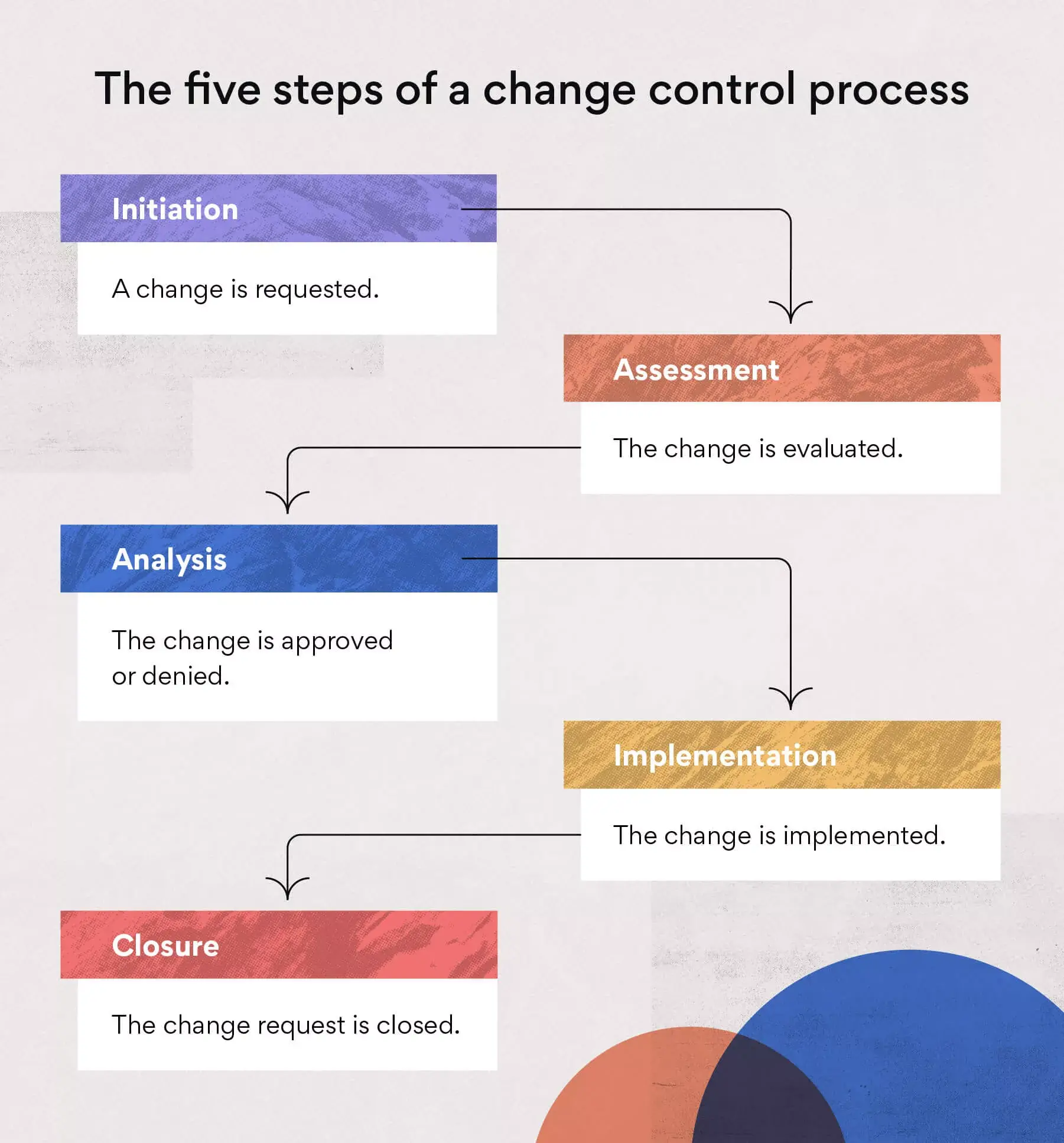
Some prefer to view the procedure in a change control process flow, which can be easier to visualize. No matter how you look at it, the outcome will be a final decision on whether a change request is approved or denied.
Create a change request form template1. Change request initiation
In the initiation phase of the change control process, a change is requested. There are numerous reasons why you might request a change. For example, a creative deliverable is taking longer than anticipated, so a request to adjust the due date would be made.
Team members should submit change requests using a designated form. Project managers should store the change log in an accessible location for all stakeholders.
After the request form is completed, update the change log with the request name, a brief description, and relevant details. The log serves as a comprehensive record of project changes, which is especially useful for long-term projects.
Here's an example of various fields you might include in a change request form.
Project name
Date
Request description
Requested by
Change owner
Priority
Impact of change
Deadline
Comments
The fields you include will depend on how thorough you want your change log to be and on the types of changes you encounter. You can simplify this process by using a change log template, which helps you keep track of every project change in a single, organized view.
2. Change request assessment
Once the request has been completed and the initial form submitted, it will be assessed. This differs from the initial form submission, as the assessment is when the actual change will be evaluated.
The assessment phase isn't where a decision is made; rather, it's where the request is reviewed for basic information. The information will likely be assessed by a project or department lead, who will review details such as the resources required, the request's impact, and who should receive it.
If the change request passes the initial assessment, it will be passed to the analysis phase, where a final decision will be made.
3. Change request analysis
The change impact analysis phase is where the final decision on whether the request is approved or denied is made by the appropriate project lead. While you may also give input on the decision, it's a good idea to get official approval from a leader as well. In some cases, there may even be a change control board responsible for change approvals.
An approved change request will require signoff, then be communicated to the team, and continue through the rest of the five-phase process. It should be documented on the change log and anywhere else project communication lives to ensure all project stakeholders understand the shifts needed.
If the change request is denied, it should also be documented on the change log. Communicating a denied request to the team can help prevent confusion.
4. Change request implementation
If the change request is approved, the process will move on to the implementation phase. This is where you and the project stakeholders will work to make the project change.
Implementing a change will look different depending on what stage the project is in, but it usually consists of updating project timelines and deliverables, as well as informing the project team. It's a good idea to evaluate the project scope to ensure any changes to the timeline won't have a huge impact on projected goals.
It's best to disseminate the request's information in a shared workspace and the change log to ensure productivity isn't lost. You may even want to send out a revised business case to cover all of your bases.
5. Change request closure
Once the request has been documented, disseminated, and implemented, the request is ready to be closed. It's helpful to have a formal closure plan to store information in a place all team members can reference in the future.
In the closing phase, any documentation, change logs, and communication should be stored in a shared space accessible later. You should also store the initial change form and any revised project plans you created along the way.
Once documents are in the appropriate place, you can close out any open tasks and work on successfully completing your project. Some project leads also host a post-mortem meeting before officially closing the project.
Change control process example
Now that you understand the five steps of a change control process, it's time to put them into action. We've put together an example to give you a tangible place to start. Before putting your own plan together, evaluate your current processes and tools to ensure they're right for your team. You may even want to create a business case or project plan to present to company stakeholders.
The entries you include in your change log may vary depending on the types of changes you encounter most often and the complexity of the projects. Smaller one-off projects may not need as detailed a change log as complex projects that span months.
Here's an example change log to give you an idea of what to include and how to format your own. This change control example includes:
Project name
Task name
Assignee
Due date
Priority status
Progress status
Change type
This simple format is a great starting point for a change log, but you may add more fields depending on the complexity of your project.
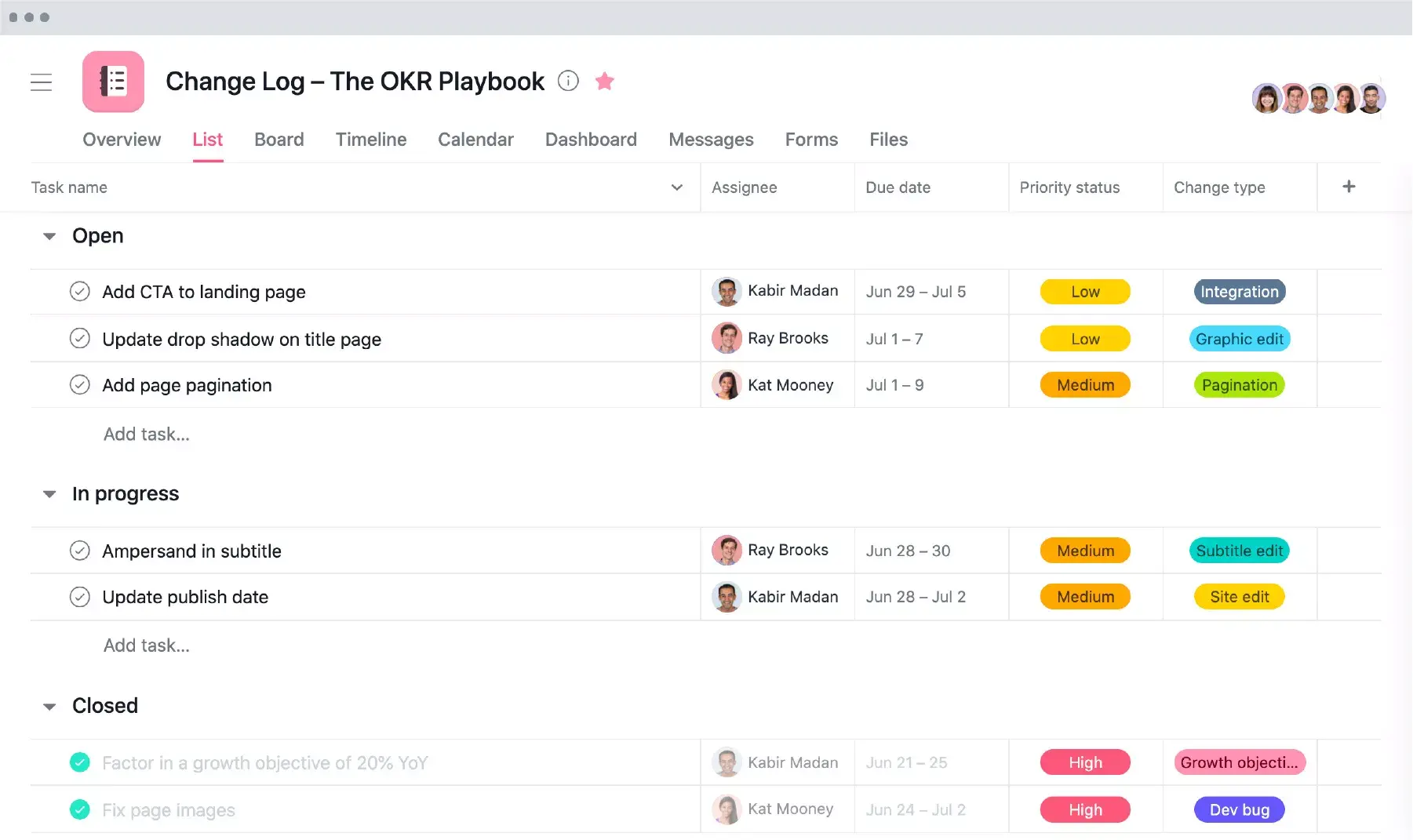
To create your own change log, you can create a custom template or view our project templates gallery.
When to use a change control process
It's a good idea to note when to use a change control management plan, so you're prepared when the time comes. There are many different kinds of change you might encounter, depending on new initiatives and the tools in place.
Common changes might include requests to extend timelines, reorganize information, or change deliverables. Here are some additional instances where you may want to use a change control process.
Over scope: You may want to consider using this process when a project exceeds its scope, also known as scope creep.
Project inconsistencies: If you notice inconsistencies during a project, requesting a change can help you avoid rework later.
Steep goals: In some cases, OKRs may be out of reach, and it's a good idea to flag those issues before the project is complete.
New tools: If there are new processes or tools in place, change may be inevitable while you work out new issues during your first few projects.
What is a change control board?
A change control board (CCB) is a group of stakeholders responsible for reviewing and approving or rejecting change requests. This dedicated group ensures decisions are made consistently with the right level of oversight.
Depending on your project's size and complexity, a change control board might include:
Project manager or project lead
Department heads or functional managers
Technical experts or subject matter specialists
Executive sponsors or senior leadership
Quality assurance representatives
The board typically meets at regular intervals or as needed when high-priority change requests come in. Their role is to assess the impact of proposed changes, weigh the benefits against the risks, and make informed decisions that keep projects aligned with organizational goals.
For smaller teams or less complex projects, a designated project lead can handle approvals instead of a formal board. The key is having a clear process for who makes decisions and how they're communicated.
Best practices for change control
Implementing a change control process is just the first step. To make it truly effective, follow these best practices:
Document everything: Keep detailed records of all change requests, including the rationale, impact assessment, and final decision. This creates an audit trail and helps you learn from past changes.
Set clear criteria for approval: define the factors that determine whether a change is approved. Consider the impact on timeline, budget, resources, and project scope.
Communicate early and often: Share information about pending and approved changes with all relevant stakeholders. This prevents surprises and keeps everyone aligned.
Prioritize change requests: Not all changes are equally urgent. Establish a system for ranking requests so critical changes get addressed quickly while less urgent ones wait their turn.
Review and improve your process: After each project, evaluate how well your change control process worked. Identify bottlenecks or gaps and adjust accordingly.
By following these practices, you can create a change control process that's both thorough and efficient, helping your team adapt to changes without losing momentum.
Tools for managing change control
Dedicated project management tools make change control smoother than spreadsheets and email by helping you track requests, automate workflows, and keep stakeholders informed. When evaluating tools, look for features like:
Customizable request forms to capture all necessary information
Workflow automation to route requests to the right approvers
Centralized dashboards to track request status at a glance
Integration with other tools your team already uses
Reporting capabilities to analyze trends and identify patterns
With workflow management software like Asana, you can create a streamlined change control process that keeps everything organized in one place. Use custom fields to track priority, impact, and approval status, and set up automated notifications so no request falls through the cracks.
Manage change with confidence
While change is inevitable, the good news is that it doesn't have to derail your next project. By implementing a change control process, you can ensure the project stays on track and communication is clear and effective. This will bolster productivity and lessen confusion about your project deliverables.
In the event you encounter change, it's reassuring to know you have the right processes in place to handle it. When you have a change management plan ready to go, you can mitigate the negative impacts of a strategy shift and continue to deliver impact.
Ready to streamline your change control process? Get started with Asana today and give your team the tools they need to manage change requests, track approvals, and keep projects moving forward.
Create a change request form template