11 leadership atyles: Types + how to find yours at work


Summary
What do Sheryl Sandberg, COO of Facebook, and Marvin Ellison, CEO of Lowe's, have in common? They are both exceptional leaders. While one makes waves in the tech industry, the other takes on the challenge of retail. Both are forward-thinking, have visions for their work, and are compelling enough to command an audience.
Leadership is not one-size-fits-all. Every leader has their own personality and experience that influences their particular style. This style can evolve over time, so the leader you are today may be different from the leader you'd like to become.
To help you better understand what your current leadership style is and how you can use it to empower your team to make an impact, we cover 11 common leadership styles and theories.
How to build a transformational AI strategy from the ground up
The journey of AI adoption is no longer uncharted territory. Supported by research from our Work Innovation Lab in partnership with frontier AI safety and research company, Anthropic, this guide offers a how-to for navigating the journey of AI adoption.
What is a leadership style?
A leadership style is the way a leader directs, motivates, and manages their team. It shapes how you make decisions, communicate expectations, and interact with team members on a daily basis.
Several key factors influence your leadership style:
Personality: Your natural tendencies toward introversion or extroversion, risk tolerance, and communication preferences
Values: What you believe is most important in work and relationships
Past experiences: The leaders you've worked with and lessons learned from previous roles
Organizational culture: The environment and expectations of your workplace
In this article, we explore leadership styles through three frameworks: Lewin's leadership theory, emotional leadership theory, and Bernard M. Bass's transformational and transactional model.
Why knowing your leadership style matters
Your leadership style influences every aspect of how you lead, from communication to decision-making. When you understand your natural tendencies, you can lead more intentionally.
Self-aware leaders can:
Build trust: Lead authentically and create genuine connections with your team
Adapt effectively: Adjust your approach to fit different situations and team needs
Grow continuously: Identify areas for development and expand your skill set
Boost engagement: Create a work environment where team members feel supported
This self-awareness helps you recognize when your default style isn't working and adjust accordingly.
Below is a quick overview of the 11 leadership styles we'll cover:
Leadership style | Best for |
Authoritarian (autocratic) | Time-sensitive decisions, clear direction needed |
Participative | Building buy-in, fostering creativity |
Délegative (laissez-faire) | Experienced, self-motivated teams |
Visionary | Organizational change, long-term direction |
Coaching | Developing team members'skills |
Affiliative | Building trust, healing team conflicts |
Democratic | Skilled teams, collaborative decisions |
Pacesetting | High-performance, deadline-driven work |
Commanding | Crisis situations, inexperienced teams |
Transformational | Inspiring change, empowering teams |
Transactional | Clear structure, defined problems |
Leading through change: Creating clarity and building trust
In this webinar, Asana experts outline concrete tips to guide your team through uncertainty. Learn how to help employees focus on what matters.


1. Authoritarian or autocratic leadership style
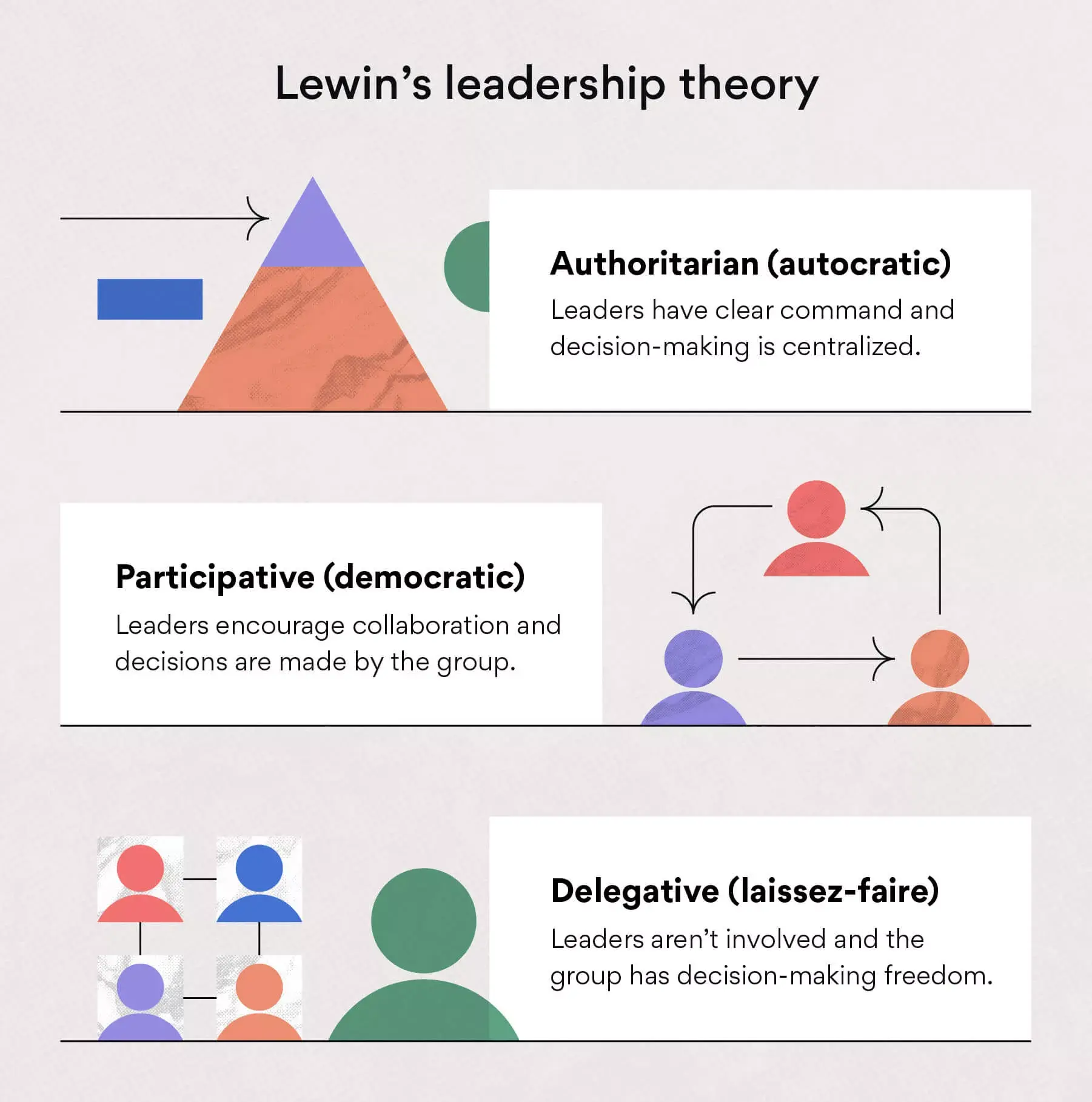
Authoritarian, or autocratic, leaders have clear command and control over their peers. Decision-making is centralized, meaning one person makes the critical decisions. An authoritarian leader has a clear vision of the bigger picture but only involves the team on a task-by-task basis.
Authoritarian leaders give personal praise or criticism but clearly separate themselves from the group. While you might assume they'd be unpleasant, that's not typically the case; they're usually friendly or, at times, impersonal.
Examples of an authoritarian or autocratic leader's style:
Their own learning is more important than the team's.
In disagreements within the company, their view is typically the right one.
If there are too many voices speaking at once, we can't get the job done.
Opposing opinions on a project I'm in charge of don't matter.
Pros of an authoritarian leadership style:
Authoritarian leaders can complete projects under a time crunch.
This style is helpful when decisive action is needed.
Autocratic leadership is successful when the leader is the most knowledgeable member of the group.
Cons of an authoritarian leadership style:
This style doesn't promote creativity.
Leaders can be viewed negatively and as overbearing or controlling.
Has difficulty trying another leadership style and are typically set in their ways.
2. Participative leadership style
Participative or democratic leaders welcome everyone's opinions and encourage collaboration. While they might have the final say, these leaders distribute the responsibility of making decisions to everyone.
Participative leaders are part of the team. They invest their time and energy in their colleagues'growth because they know it will help them reach the end goal. If you excel in collaborative group environments, this might be your leadership style.
Examples of a participative leader's style:
Prioritizing the group's learnings will benefit my role.
In disagreements within the company, we should hear everyone's opinion and then come to a solution.
The more people we have working on a project, the better the outcome will be.
Opposing views because it will make the end product better.
Pros of a participative leadership style:
This is the most effective leadership style, according to Lewin's study.
Participative leadership leads to higher-quality contributions.
There is more creativity, and group members feel engaged.
Everyone understands the bigger picture and is motivated to reach the end goal.
Cons of a participative leadership style:
Teams led by participative leaders aren't as productive as those led by authoritarian leaders.
All team members need to be bought into collaboration for it to work.
3. Delegative or laissez-faire leadership style
Lewin's third style is delegative or laissez-faire leadership. Delegative leaders offer very little guidance to the group. They allow team members complete freedom in decision-making.
Delegative leaders distance themselves from the group and avoid disrupting a project's trajectory. Their comments are infrequent, giving team members significant autonomy over their work.
Examples of a delegative or laissez-faire leader's style:
The group can decide what's best for them, but I expect a stellar end product.
In disagreements within the company, others can make a decision without my input.
I'll pass along resources to my team. From there, I want group members who are self-starters and can determine how to proceed.
Those with opposing views can try their methods individually.
Pros of a delegative leadership style:
Delegative leadership can be beneficial if all group members are qualified experts.
Those who value autonomy will have high job satisfaction under this leadership.
If the team shares the leader's goal, it can be achieved. Goal tracking software can be used to monitor progress.
Cons of a delegative leadership style:
Teams with laissez-faire leadership are the least productive, according to Lewin's study.
With a delegative leader, roles and responsibilities are unclear.
This style can lead to team members blaming each other and not taking any responsibility.
Now that you understand Lewin's three leadership styles, let's take a different approach by looking at emotional leadership theory. This approach will help you use emotional intelligence to read the room and apply the correct leadership style.
4. Visionary leadership style
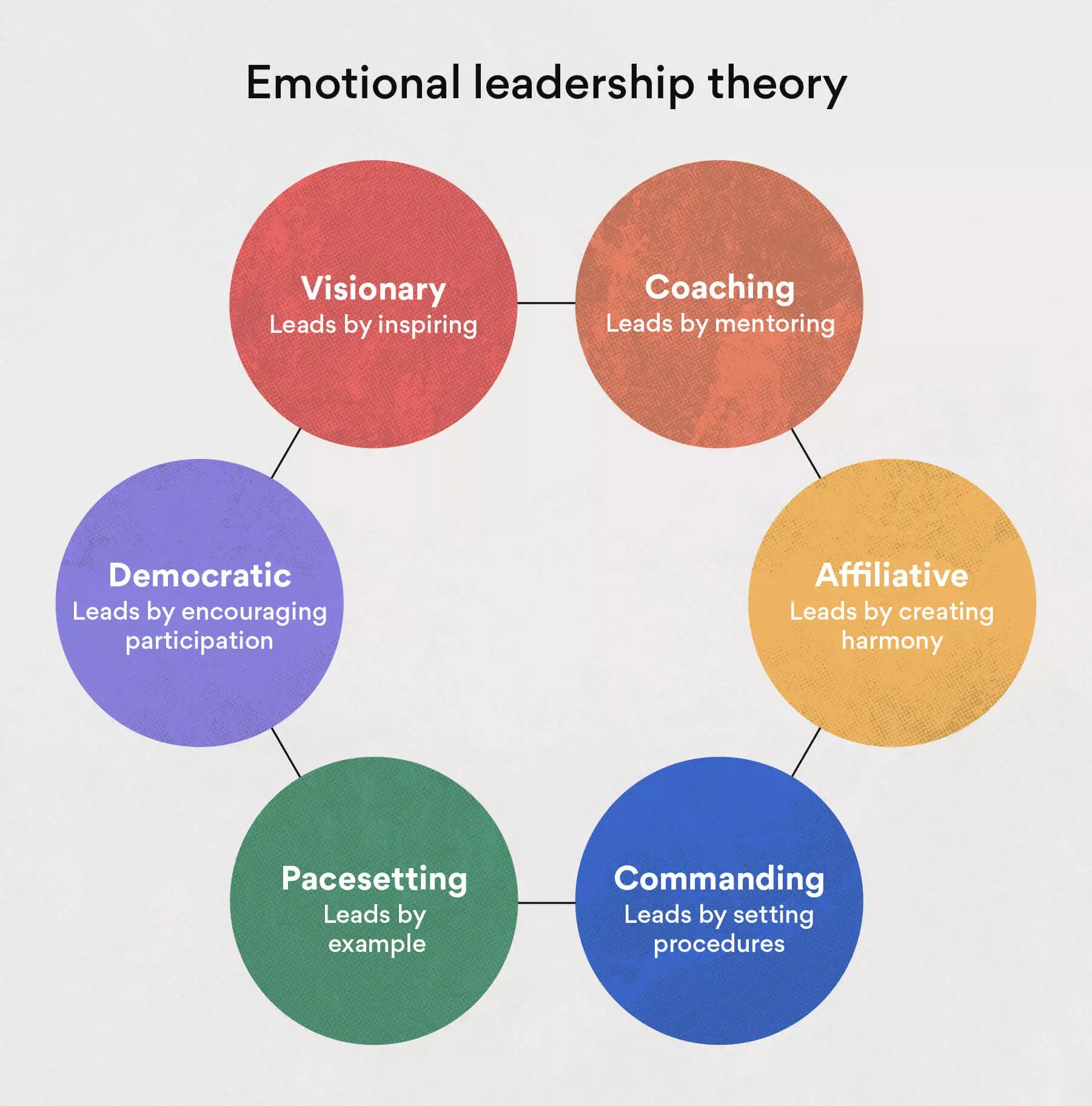
Visionary leadership is comparable to Lewin's authoritative leadership style. Visionary leaders have clear, long-term visions and can inspire and motivate others.
This type of leadership is best used when there is a big change in the company or a clear direction is needed. People look for someone they trust to follow into the unknown.
It is less successful when other team members are experts who have differing ideas or opinions. These team members won't want to blindly follow a leader they don't agree with.
Read: How to build expert power (and become a better leader)Pros of a visionary leadership style:
Members of the organization feel inspired and understand their roles.
Temporary problems don't dishearten the leader because they have their eye on the end goal.
Visionary leaders are skilled at creating contingency plans to address challenges posed by external factors, such as politics or world events.
Cons of a visionary leadership style:
Teams lack short-term focus.
Vision can be lost if it's too intertwined with the leader's personality.
Visionary leaders have the potential to reject other group members'ideas.
5. Coaching leadership style
A coaching leader can identify other team members' strengths and weaknesses and coach them to improve. They can also tie these skills to the company's goals.
Coaching leadership is successful when the leader is creative, willing to collaborate, and can give concrete feedback. It's also important that the coach knows when to step back and give the person autonomy.
If you've ever had a bad coach, you know that coaching isn't for everyone. When done poorly, coaching leadership can be seen as micromanaging.
Leading through change: Creating clarity and building trust
In this webinar, Asana experts outline concrete tips to guide your team through uncertainty. Learn how to help employees focus on what matters.
Pros of a coaching leadership style:
Coaching leadership can create an environment that is motivating and that group members enjoy being a part of.
There are clear expectations, so team members'skills can develop.
This style of leadership gives companies a competitive advantage by producing skilled individuals who are productive and willing to coach others.
Cons of a coaching leadership style:
Coaching leadership requires patience and time.
It only works if others are open to receiving this type of leadership.
Coaching leaders rely heavily on relationships, which can be difficult if there isn't team chemistry.
6. Affiliative leadership style
Affiliative leadership is relationship-focused. An affiliative leader's intention is to create harmony. This charismatic leader works to build and foster relationships in the workplace, resulting in a more collaborative and positive work environment.
An affiliative leader is helpful when creating a new team or in crisis, as both situations require trust. This leadership style can be harmful when the leader focuses too much on being a friend and is less concerned with productivity and company goals.
Pros of an affiliative leadership style:
Team morale is boosted by positive and constructive feedback.
Interpersonal conflict is quickly stopped.
Team members feel important and have less stress.
Affiliative leadership creates tightly knit teams that are empowered to help each other.
Cons of an affiliative leadership style:
Some team members may be underperforming under the radar. A lack of clear roles can lead to social loafing.
Affiliative leaders are reluctant to say anything negative, which doesn't help others grow.
The organization's goals are often forgotten.
Team members become emotionally dependent on the leader. If the leader were to change teams or leave, the rest of the team would be lost.
7. Democratic leadership style
Democratic leadership is the same concept as Lewin's participative leadership. All team members are encouraged to participate and share ideas. As a result, the team feels empowered, even though the leader ultimately has the final say.
Democratic leadership is successful in highly skilled teams, where members can provide fruitful contributions. It is less impactful for junior teams that don't have as much experience or knowledge on the topic.
Pros of a democratic leadership style:
Collaboration leads to creativity and innovation.
There is high employee engagement and trust.
Common goals lead to high accountability and productivity.
Cons of a democratic leadership style:
Collaboration takes time.
Team members can lose trust if the leader makes a decision without their input.
Democratic leadership isn't successful if team members aren't skilled.
8. Pacesetting leadership style
A pacesetting leader sets an example of high productivity, performance, and quality. Team members are supposed to follow in their footsteps. If team members can't keep up, pacesetting leaders will step in and complete the task correctly.
Pacesetting leadership is successful when the leader creates clear requirements and motivates team members to meet deadlines. It's unsuccessful when team members lose trust in the leader and become stressed, overworked, or unmotivated.
Pros of a pacesetting leadership style:
Pacesetting leaders achieve business goals on time.
Teams can be fully utilized with a pacesetting leader.
Progress reports help identify issues quickly.
Cons of a pacesetting leadership style:
Pacesetting leadership can lead to stressed and unmotivated team members with low morale.
Team members can lose trust if the leader is watching and correcting their every move.
A strong focus on results and deadlines can lead to less creativity.
Limited feedback is given.
9. Commanding leadership style
Commanding leadership is comparable to directive or coercive leadership. In this style, the leader has clear goals and objectives that they communicate to the team and expect others to follow. They put procedures and policies in place to create structure.
Commanding leadership is typically used when other team members don't have skills or expertise. It is also successful in emergency situations when there is no time for discussion. This leadership style should be used in combination with the others, if used at all.
Pros of a commanding leadership style:
There are clear expectations that can improve job performance.
It's useful in times of crisis as decisions can be made quickly.
Commanding leadership can be helpful in groups of low-skill or inexperienced workers.
Commanding leaders can quickly identify if a team member is falling behind.
Cons of a commanding leadership style:
If the leader isn't more experienced than the group, this leadership style fails.
There is no collaboration, which stifles creativity.
Team morale can drop, and employees aren't as engaged.
There is a high dependency on the leader, causing a bottleneck.
A commanding leader can easily turn into an autocratic leader.
Emotional leadership theory can easily be implemented in your day-to-day work. First, identify the type of team you're working with. Then consider which leadership styles could best support your tasks.
Read: How to effectively manage your team’s workload10. Transformational leadership style
In addition to Lewin's leadership theory and emotional leadership theory, there are two other noteworthy leadership styles: transformational and transactional.
Both of these styles were documented by Bernard M. Bass, an American psychologist who studied organizational behavior and leadership. While you might not know them by name yet, you've probably seen them in the workplace.
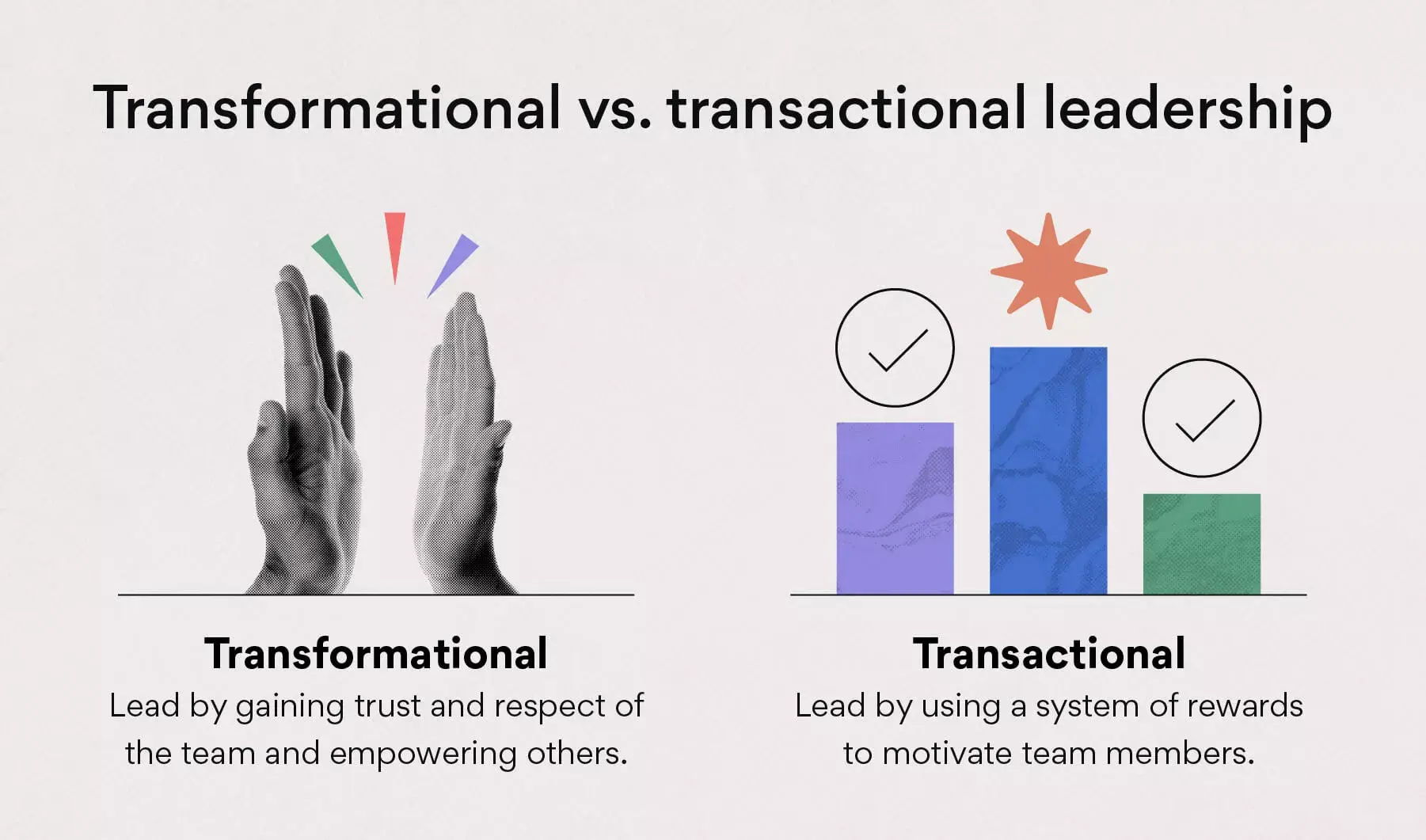
Bernard M. Bass's most popular theory is transformational leadership, also referred to as the four I's. This theory is built on James MacGregor Burns'1978 concept that "leaders and followers help each other to advance a higher level of morale and motivation."
Transformational leaders earn the trust and respect of those who want to follow them. The four I's measure how transformational a leader is:
Individualized consideration: Attending to each team member's needs and acting as a mentor
Intellectual stimulation: Encouraging creativity and challenging assumptions
Inspirational motivation: Articulating a vision that motivates and inspires the team
Idealized influence: Serving as a role model for ethical behavior and values
Pros of a transformational leadership style:
Transformational leaders use coaching and encouragement to empower their team.
Team members are seen as individuals, allowing all their unique skills to be put to effective use.
Teams are united around a common cause, which drives growth within the company.
Individuals are given freedom.
Cons of a transformational leadership style:
Smaller tasks are easily forgotten, making it difficult to make the vision a reality.
The constant involvement of a leader can result in pressure and burnout.
The leader's goals must align with the company's goals; otherwise, it becomes risky.
All team members must respect the leader and agree with their approach.
11. Transactional leadership style
Transactional leadership was first conceptualized by sociologist Max Weber. It was then elaborated on by Bernard M. Bass in opposition to transformational leadership.
Transactional leadership uses rewards and punishments to motivate team members. This type of leader believes that a clear chain of command will lead to better performance. Team members need to follow instructions and are closely monitored by the leader.
Pros of a transactional leadership style:
Transactional leadership is useful in situations that have a clearly defined problem.
This style of leadership can be helpful in a crisis, as it provides clear roles for everyone.
Group members know what is expected of them.
Cons of a transactional leadership style:
A transactional leadership style stifles team members' creativity.
Transactional leaders don't support team members'emotional needs.
These types of leaders don't reward individual initiative.
This leadership role typically doesn't lead to long-term success because it's too focused on short-term goals.
Leadership vs. management
Leadership and management are often used interchangeably. However, the two have different meanings.
A leader uses their vision to push a company forward, while keeping the team inspired. On the other hand, managers have an operational role in the company, keeping projects on track through a specific management style.

Management is operational; it’s about setting priorities, evaluating priorities, hiring and firing decisions, compensation decisions, things like that. A leader is more of a coach, or even a spiritual guide. She is responsible for maintaining energy, keeping everyone on the team inspired and helping them grow, and for ensuring everyone is aligned in the same direction. A leader must be a point of strength and stability across changes.”
You don't need to be a manager to be a leader. Leaders with the right qualities can be found in every role in a company, not just top-level positions. If you're working to become a better leader in your role, it's helpful to understand the pros and cons of your current leadership style.
Read: Leadership vs. management: What’s the difference?How to find your leadership style
There are many leadership theories, each offering a different perspective on effective leadership. Here's a quick comparison of the three frameworks covered in this article:
Framework | Key styles | Core idea |
Lewin's theory | Authoritarian, participative, delegative | Participative leadership is most effective for team engagement |
Emotional leadership | Visionary, coaching, affiliative, democratic, pacesetting, commanding | Effective leaders adapt their style to the situation |
Bass's model | Transformational, transactional | Leaders motivate through empowerment or through rewards and structure |
There isn't a single correct leadership style, but there's likely one you're naturally drawn to. Which did you relate to most? Understanding the pros and cons helps you become a leader who empowers your team to thrive.
Here are some practical ways to identify and develop your leadership style:
Seek feedback from colleagues: Ask your team members and peers how they perceive your leadership approach.
Reflect on your natural tendencies: how you respond under pressure, make decisions, and communicate with others.
Test different approaches: Try experimenting with different leadership styles in low-stakes situations.
Consider formal assessments: Leadership style assessments and 360-degree feedback tools can provide structured insights.
Lead your team with clarity and confidence
A leadership style is how you put your leadership skills into action. No two leaders are the same; how one approaches motivating others, solving problems, and taking risks can be vastly different from the next.
Whether you're a visionary or a coach, the right tools help you turn leadership into action. Work management software keeps your team aligned and focused on what matters most.
Get started with Asana to bring clarity to your team's work and help everyone move forward together.
Leading through change: Creating clarity and building trust
In this webinar, Asana experts outline concrete tips to guide your team through uncertainty. Learn how to help employees focus on what matters.